Skip to brief
Open Workspace
Batteries Hub Brief · 4 pages
Download PDF

Battery passports, Europe’s battery market and who holds the battery record. A brief to read, print or share.

ActivateDigitalactivatedigital.ai · Batteries · November 2026

01 / THE EU AND THE BATTERY RECORD

Batteries

Every battery
will need a record.
Who holds it?

From 18 February 2027, the EU Battery Passport is a condition of placing covered batteries on the EU market. Whoever holds the approved record of what a battery is, what it’s made of and how healthy it is decides what buyers, authorities, repairers and recyclers see.

A record that lives with the battery.

A Battery Passport is a digital record linked to one battery. It brings together its identity, chemistry, performance, carbon footprint, materials and how it can be repaired, repurposed or recycled.1

The QR code opens the record. Behind it sits a governed identity: one approved set of facts, the evidence for each and control over who may see or change them.

dppcode.org
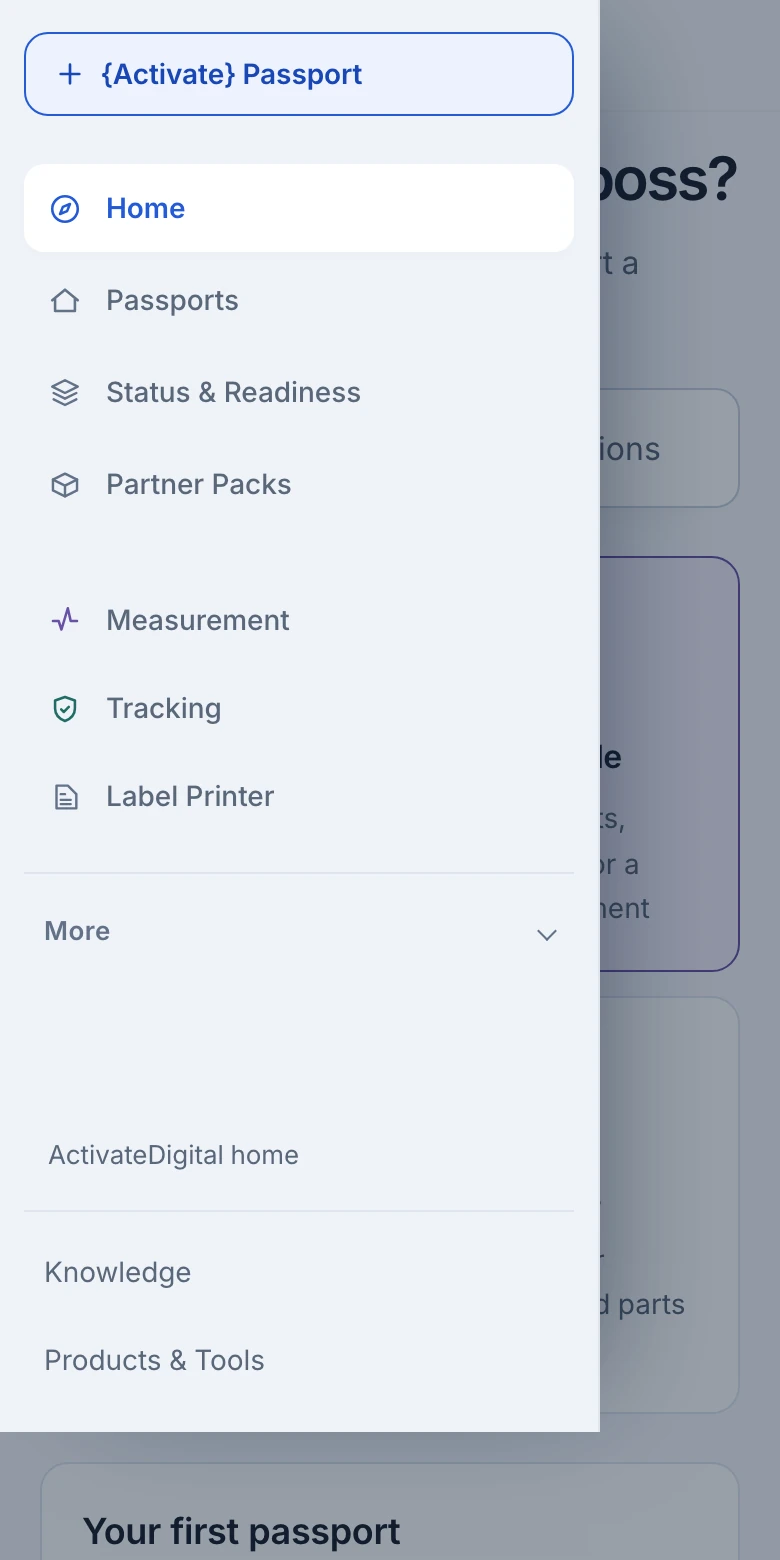
ActivateDigital Workspace on a phone Activate Passport in the Workspace menu Published BYD Battery-Box Premium HVS 10.2 passport Published BYD Battery-Box Premium HVS 10.2 passport, a public-data demonstration by ActivateDigital, not issued by BYD
Live on DPPcode.org
Open the live passport Product walkthrough · public-data demo
1.88m

battery-electric cars
registered in the EU in 20252

27.1 GWh

of battery storage
installed in the EU in 20253

The EU fleet is heading for about 470 GWh of storage by 2030.3 The challenge now is data: chemistry, carbon footprint, materials and state of health for every battery.1
Each covered battery will need its record.

Keep batteries in use. Keep trade moving.

The EU wants batteries that last longer, can be repaired and repurposed, and come back as material for new ones. That needs the right information, open to the right people, for the whole life of the battery.1

For manufacturers

From 18 February 2027, each LMT battery, industrial battery above 2 kWh and EV battery needs a passport. No record, no market.1

For importers and distributors

Whoever places the battery on the EU market carries the duty. Their evidence requests will reach the maker.

For repairers and recyclers

State of health and dismantling information decide what happens next. A repurposed battery gets a new passport.

The rules are already in force.

18 August 2025Separate-collection marking and waste information apply.1

20 July 2026EU passport registry operational. Each passport is registered.4

Q4 2026Access rules planned. A draft was published on 19 October.4

18 February 2027Battery Passport applies to LMT, EV and industrial batteries above 2 kWh.1

ActivateDigital, from Signal Analytics, a UK company. We build governed product identities from the data makers already hold.

1 Regulation (EU) 2023/1542, Arts 77, 78, Annex XIII: passport scope, content and access; each requirement has its own category and date. 2 ACEA, 27 January 2026: 1,880,370 battery-electric cars, 17.4% share. 3 SolarPower Europe via pv magazine, January 2026: EU installations; SolarPower Europe, June 2026: EU fleet by 2030. 4 Reg (EU) 2026/1778: passport registry; battery access rules: draft, not yet adopted.

activatedigital.ai/partners/batteries/brief01 / 04
ActivateDigitalactivatedigital.ai · Batteries · November 2026

02 / THE ACTIVATEDIGITAL ENGINE

Stop filling forms.
Start solving passports.

Our engine builds a battery’s identity against live regulation and standards. It reads maker documents, reconciles and calculates what the evidence supports, then publishes the passport to DPPcode.org.7

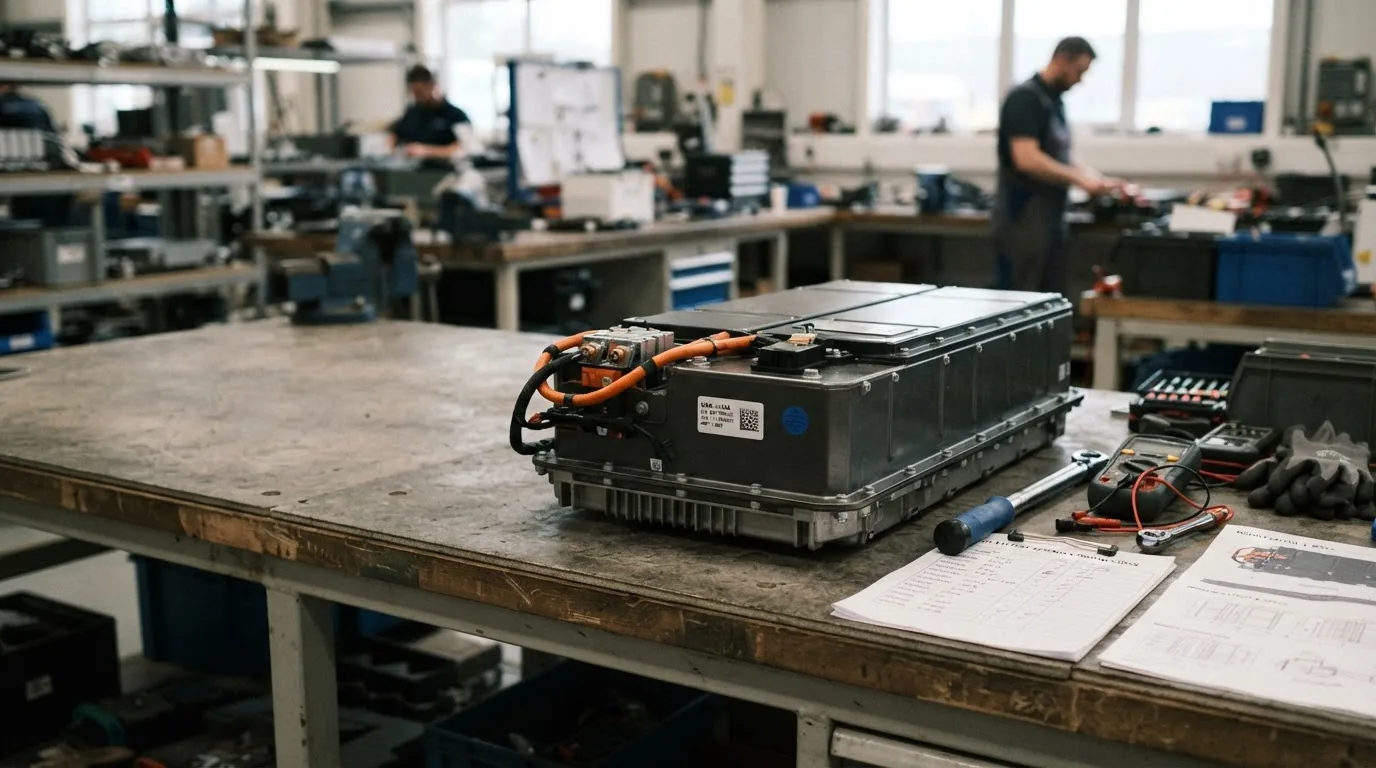
An EV battery module on a workshop bench
THE INPUTS
500

battery passports
built in minutes*7

Try it in the engine ↗
100%

aligned with
BatteryPass-Ready v2.0.15

See the report ↗
20+

ways to
connect your data7

Explore the inputs ↓
32

requirements mapped to
(EU) 2023/15421

Explore full coverage ↗

*Up to 100K batches tested via custom API integration. 32 is our operational model of the requirements, not 32 statutory fields.7

7,571batteries in our database

726battery makers mapped

144,854battery data points collected

You connect. Our engine builds.

01

Start from a model number.

Give us a product number and a name, or upload datasheets, safety data sheets and declarations. Start with what you hold.

02

Let the engine resolve it.

It reads maker documents, reconciles conflicting values and runs bounded calculations, labelled as calculated. Each result stays tied to the right battery.

03

{Activate} the record.

Answer what only you know, such as manufacture date and plant. Approve in Workspace, then publish and keep the record current.

Anchored in regulation.
Built on industry standards.

32

requirements mapped to
(EU) 2023/15421
Explore full coverage ↗

Identity, chemistry, performance, durability, carbon footprint, materials, safety and end of life. One approved record holds the facts, their evidence and who may see or change them. That is a governed product identity.

EU Batteries Regulation ↗The legal basis for our battery model

GS1 Digital Link ↗A product identifier that opens its passport

Access by role ↗Public, restricted and authority views kept apart

The facts exist. The connections are missing.

Our research on real industrial batteries
20 batteries · 805 required values5

58%of required values are in no public document

0 of 20publish round-trip efficiency at 50% of cycle life

2 of 20publish their manufacturing month and year

4rows blank on every real battery we checked

5 ActivateDigital, EU Readiness Report: Batteries, October 2026 (partner access): batteries over 2 kWh; test packs written by us, not endorsed by makers; filled values still need review. 6 Battery database, 12 Nov 2026: 247 maker sites block files or need a login. 7 ActivateDigital: Batteries · Methodology · Battery passport software. 8 Blank rows guide.

activatedigital.ai/partners/batteries/brief02 / 04
ActivateDigitalactivatedigital.ai · Batteries · November 2026

03 / MAKERS, IMPORTERS AND OPERATORS

Make the battery.
Own the record.

The maker is best placed to start a battery’s record. Built once, it follows the battery to every buyer, operator, repairer and recycler and changes as the battery ages, instead of being rebuilt by each one.1

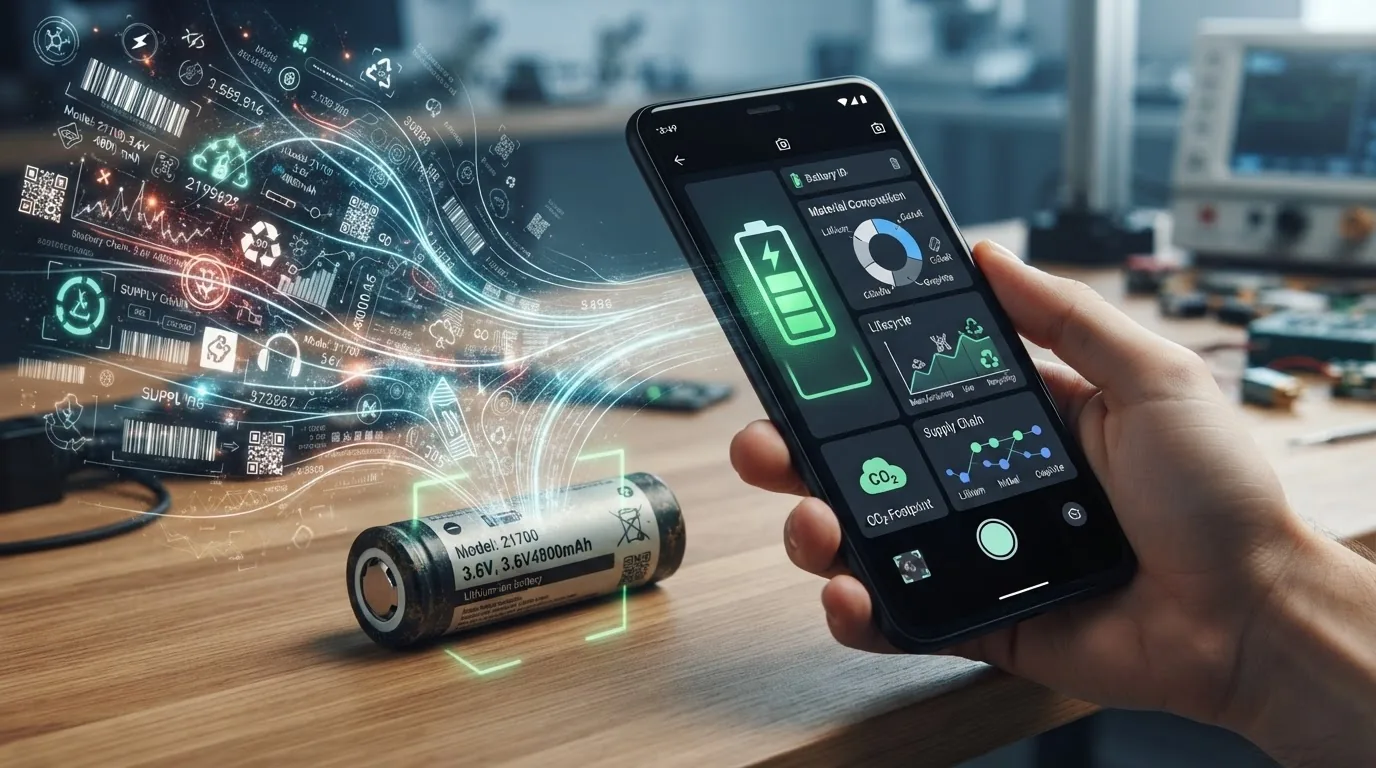
A battery cell being scanned to open its passport
THE RECORD TRAVELS

WHAT MAKERS
CAN DO NOW

Build it once.
Keep it current.

The category sets the duty. LMT and EV batteries need a passport at any size, industrial batteries above 2 kWh. Check the finished battery’s category first.1

Some facts only the maker holds. Manufacture date, renewable content and internal resistance appear in 2 or 3 of 20 public document sets. Name an owner for each fact.5

Plan for the battery’s life. State of health, status and second life update the record after sale. Who may read and update each part is set by Annex XIII and the access rules still to come.1,4

Four public rows are blank on every real battery we have checked. A passport can say why, and show an estimate beside a blank, labelled as ours.8

One record. Every output.

Let’s connect.

ONE OUTPUT. LIVE NOW.

Scan it. Follow the evidence.

BYD Battery-Box HVS 10.2 · Battery Passport ↗

QR code for the live BYD Battery-Box demonstration passport

The BYD record is a public-data demonstration by ActivateDigital, not issued by BYD. Lifecycle and Activate&Measure in beta; Activate&Track for approved accounts. A passport alone does not establish legal compliance.

activatedigital.ai/partners/batteries/brief03 / 04
ActivateDigitalactivatedigital.ai · Batteries · November 2026
04 / SOURCES

Sources and references

Every figure and footnote in this brief links to its source. The full addresses are here for print.

  1. 1Regulation (EU) 2023/1542 concerning batteries and waste batteries, Articles 77 and 78 and Annex XIII.eur-lex.europa.eu/eli/reg/2023/1542/oj/eng
  2. 2ACEA, New car registrations: +1.8% in 2025; battery-electric 17.4% market share, 27 January 2026.www.acea.auto/pc-registrations/new-car-registrations-1-8-in-2025-battery-electric-17-4-market-share/
  3. 3SolarPower Europe, EU battery storage market review, via pv magazine, 28 January 2026. SolarPower Europe, European Battery Market Outlook 2026–2030, 23 June 2026.www.pv-magazine.com/2026/01/28/eu-installs-27-1-gwh-of-battery-storage-in-2025-as-utility-scale-leads/www.solarpowereurope.org/press-releases/new-report-european-battery-storage-surges-in-2025-as-utility-scale-drives-next-growth-phase
  4. 4Commission Implementing Regulation (EU) 2026/1778, Digital Product Passport registry. ActivateDigital, battery access rules status, checked 28 October 2026.eur-lex.europa.eu/eli/reg_impl/2026/1778/oj/engactivatedigital.ai/knowledge/category/batteries
  5. 5ActivateDigital, EU Readiness Report: Batteries, October 2026, updated 6 November 2026. Partner access.activatedigital.ai/partners/batteries/reports/feasibility
  6. 6ActivateDigital battery database, 12 November 2026.activatedigital.ai/knowledge/category/batteries
  7. 7ActivateDigital, Batteries, Methodology and Battery passport software.activatedigital.ai/?journey=batteriesactivatedigital.ai/methodologyactivatedigital.ai/battery-passport-software
  8. 8ActivateDigital, What goes in a battery passport when the manufacturer hasn’t published the data?activatedigital.ai/knowledge/digital-product-passport/batteries/fields-no-maker-publishes-yet

ActivateDigital Knowledge and products referenced

Figures and claims are recorded with their basis and limits. A passport alone does not establish legal compliance.

activatedigital.ai/partners/batteries/brief04 / 04
FROM THE BATTERIES HUBPartner code required

OUR LATEST REPORT

Battery readiness:
what makers already publish.

What battery makers publish today against what the February 2027 passport requires.

Read the report

REGULATION & TIMING

Know what applies.
See what’s next.

Follow the battery rules, passport requirements and dates that matter.

Explore regulation

Share the brief

Copy this link to share the brief.