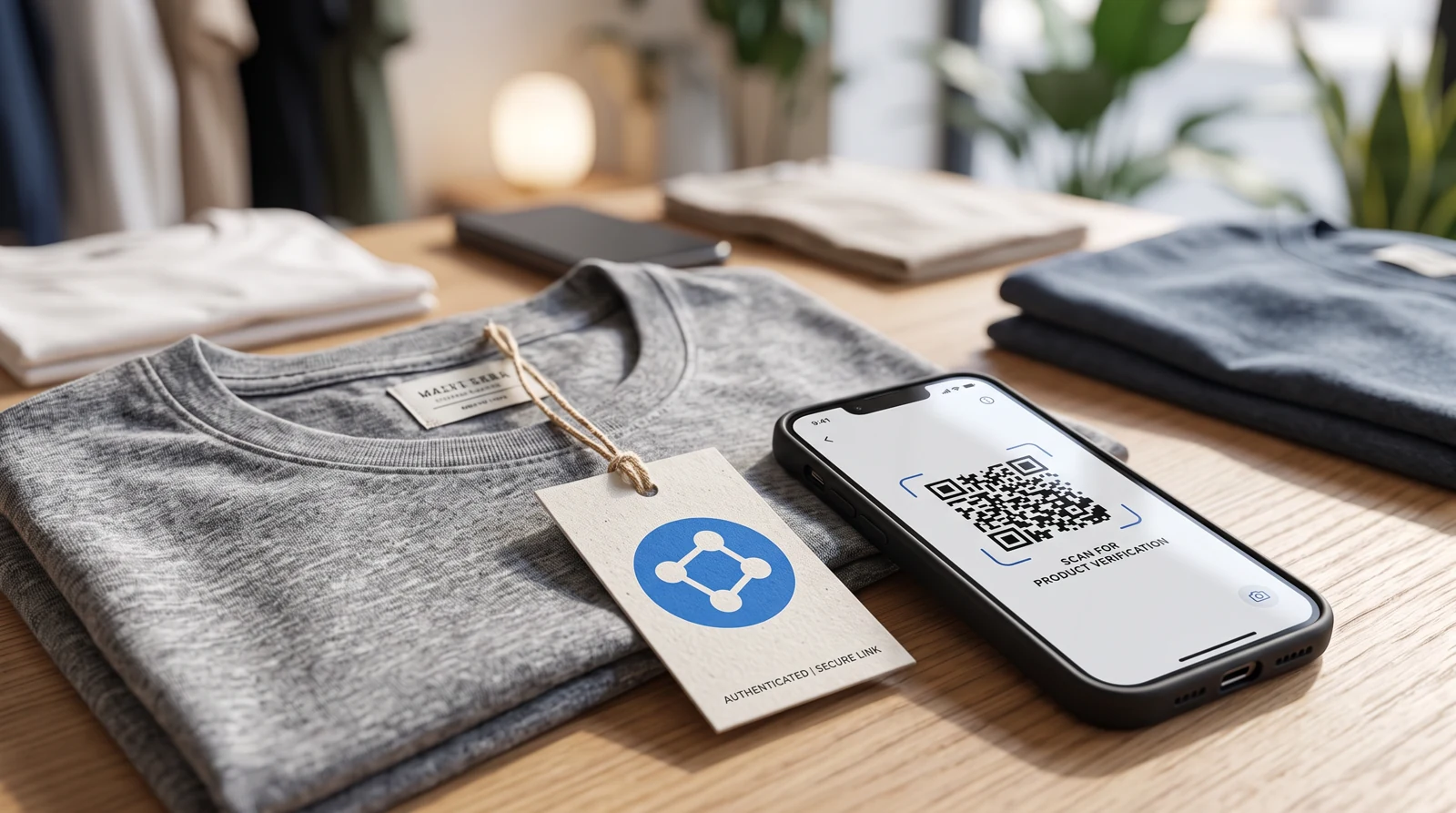
Digital Product Passports make product information a condition of selling into the EU. Whoever holds the approved record of what a garment is, where it was made and what it weighs decides what buyers, customs and recycling schemes see.
A record that travels with the garment.
A Digital Product Passport (DPP) is a digital record linked to a product. For a garment, it brings together information such as its identity, materials, where it was made and how it can be cared for, repaired or recycled.1
The EU wants longer-lasting textiles and more repair, reuse and recycling. Europeans now buy a record 19 kg of textiles each a year. Useful information has to travel with the garment.4
For brands and importers
When the textile rules apply, covered products need a passport to enter the EU market. No record, no sale.2
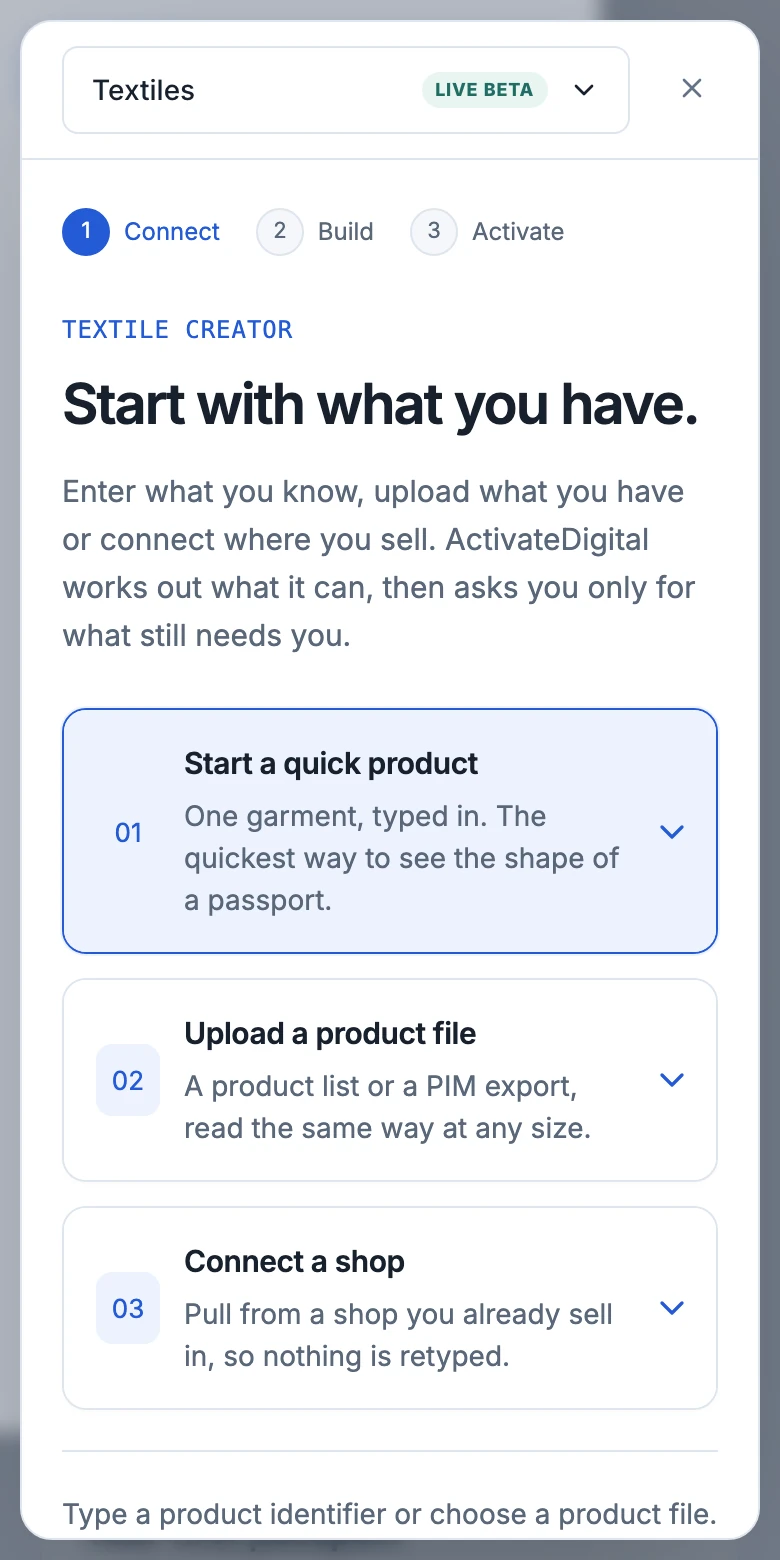
Our engine builds a garment’s identity against live regulation and standards. It researches, reconciles and calculates what the evidence supports, then publishes the passport to DPPcode.org.7
70%+ basis: richer records in controlled testing settled about 71% of scoped decisions before any answer (37/52, including 8 not applicable). 10 products, 34 variants.6
textile attributes in our model, mapped to EU product law6,7
Identity, materials, origin, footprint, care, repair, safety and end of life. One approved record holds the facts, their evidence and who may change them. That is a governed product identity.
EU ESPR ↗The regulatory basis for our textile model
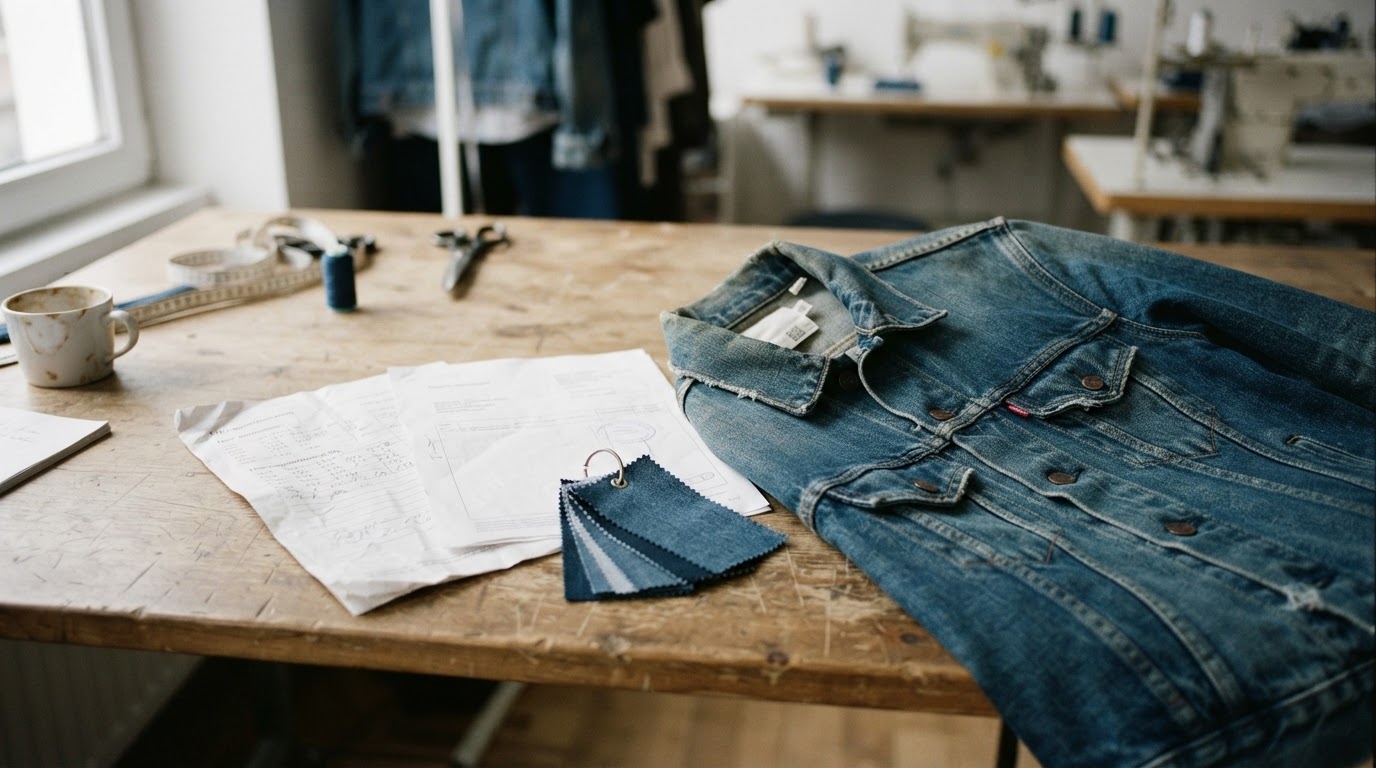
Whoever makes the garment is best placed to start its record. Built once at the factory, it travels to every buyer, customs check and recycling scheme, instead of being rebuilt by each one.2
Origin follows the work. EU customs origin follows the last substantial transformation. Dyeing or a logo alone doesn’t move it: a white jumper made in Türkiye and dyed in the UK stays made in Türkiye. France’s traceability rules show each step’s country.8,11
A new label starts from the maker. A brand or shop that sells the garment under its own name or logo takes on the manufacturer’s duties. So can one that dyes it a new colour. A new brand or colour needs a new GTIN. Its passport starts from the maker’s record and adds only what it changed.2,10
Build the record now.Fibre composition by component, production stages, factory details, care, garment weight and responsible businesses. Build it once with ActivateDigital and answer every buyer with a Partner Pack: one live link that always shows the latest version, even if the final rules change.1,2
EURATEX, the European textile and apparel industry body, backs the passport, provided it is practical and proportionate for SMEs.9
 activatedigital.ai · Textiles · November 2026